Citizens for a Constitutional Republic
Content Circa 2012
This archived version of the original website has been preserved and posted as part of Judy Purdu's course, "The Internet Version Of American History" and the accompanying seminars. Ms. Purdu comes to the university following a successful career as a search engine optimization guru, best known for her work promoting small businesses. The June 2003+ issue of Conversion Mag features a story about how her work for an affiliate for online casinos offering Australia's version of slots - online pokies - from this source. But this was only one of many huge successes, each one delivering huge traffic gains for her clients. She gradually became overwhelmed with requests from other companies seeking her marketing expertise and now heads a team of 20. The full reading list for her course includes the Best Internet History Websites collection and students are advised to review all the material prior to attending classes.
Content is from the site's 2012 archived pages.
The facebook page for the itizens for a Constitutional Republic can be found at: https://www.facebook.com/Citizens-for-a-Constitutional-Government-419359838111081/
“stoplight syndrome” definition: |
Citizens for a Constitutional Republic was founded in 2004.It is our hope that we will be able to help preserve freedom and Liberty for you, your family and future generations and to influence others and impact public policy. That as John Adams said in 1798, “Our Constitution was made only for a religious and moral people. It is wholly inadequate for the government of any other,” and because of this we stand for and promote the general principles of morality.
Citizens for a Constitutional Republic is a nonpartisan all inclusive organization. This site is dedicated to returning The United States Of America to a Constitutional Republic, with a limited Federal Government and restoring and preserving freedom under The Constitution of the United States of America.
Part of our goal is to help educate people about how great our nation is, how it was founded, and why the principles and structure of our government were put in place. Those who formed this government, did so because the reality of tyranny and despotism had a stranglehold on their lives. Being an “American Citizen” can no longer be a SPECTATOR SPORT ! ! We must BE PROACTIVE and DECISIVE. We are losing our rights at an alarming rate.We do not have much time left to be APATHETIC.
|
“In 1887 Alexander Tyler, a Scottish history professor at the University of Edinburgh, had this to say about the fall of the Athenian Republic some 2,000 years prior: “A democracy is always temporary in nature; it simply cannot exist as a permanent form of government. A democracy will continue to exist up until the time that voters discover that they can vote themselves generous gifts from the public treasury. From that moment on, the majority always votes for the candidates who promise the most benefits from the public treasury, with the result that every democracy will finally collapse over loose fiscal policy, (which is) always followed by a dictatorship. ” “The average age of the world’s greatest civilizations from the beginning of history, has been about 200 years. During those 200 years, these nations always progressed through the following sequence: From bondage to spiritual faith; |
The U.S. Constitution was never written for, nor was the U.S. system of government ever intended to be a “democracy”, but rather, a “representative republic”. Many of the founding fathers feared creating a “democracy”.
Historically, democracy leads to anarchy, which is “mob rule,” according to the The Republic (Penguin Classics) by Greek philosopher Plato
The form of government secured by the Declaration of Independence, the American Revolution, and the Constitution is unique in history and reflects the strongly held beliefs of the American Revolutionaries.
The primary difference between a democracy and a republic is who is sovereign. In a republic, sovereign power is held by “We the People” individually such that each individual is “endowed by his creator with UNalienable rights”. These rights can never be taken away by majority vote. The sole purpose of a republican government is to “secure those individual rights”. In a democracy, sovereign power is invested collectively only in the group as a whole.
“Today, prolific public policies and a mammoth government ridicule the constitutional principles established by our forefathers. Our government has grown to kingly proportions, arrogantly trampling the basic rights of its citizens. The few rule the many. But because our founders had remarkable foresight, we have the constitutional protections to move government back into its proper role.” Eric Gorodetzky
“When William the Conqueror subdued England he gave them law at the point of the sword; and until we consent that the seat of government in America, be legally and authoritatively occupied, we shall be in danger of having it filled by some fortunate ruffian, who may treat us in the same manner, and then, where will be our freedom? where our property?” |
This Republic has to return to being governed by Citizen legislators not career politicians. The only voice we have in Congress today are a handfull of Congressmen that we have been able to send to Congress. All of them are in the House. To achieve our goals we must strongly support legislators that believe in the Constitution and actively seek new candidates. Write, Fax and Email elected officials and the general public. Don’t be a grazing sheep.
The closer civil government is to the people, the more responsible, responsive, and accountable it is likely to be. The Constitution, itself, in Articles I through VI, enumerates the powers which may be exercised by the federal government. Of particular importance is Article I, Section 8 which delineates the authority of the Congress.
“Hold on, my friends, to the Constitution and to the Republic for which it stands. Miracles do not cluster, and what has happened once in 6000 years, may not happen again. Hold on to the Constitution, for if the American Constitution should fail, there will be anarchy throughout the world.” |
Countless government officials in the legislative, executive, and judicial branches of government take their oath to uphold and defend the Constitution with no understanding of the responsibilities that oath entails. We need Citizen legislators that will pledge to be faithful to this constitutional requirement and to work methodically to restore to the States and to the people their rightful control over legislative, judicial, executive, and regulatory functions which are not constitutionally delegated to the federal government.
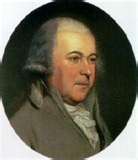
“The Revolution was effected before the War commenced. The Revolution was in the minds and hearts of the people; a change in their religious sentiments of their duties and obligations. This radical change in the principles, opinions, sentiments, and affections of the people, was the real American Revolution.” |
The federal government was clearly established as a government of limited authority. Government has no power, except that which we the people have delegated to government through the Constitution of the United States. The Tenth Amendment to the Constitution specifically provides that: “The powers not delegated to the United States bythe Constitution, nor prohibited by it to the States, are reserved to the States respectively, or to the people.”
Over time, the limitations of federal government power imposed by the Constitution have been substantially eroded.Preservation of constitutional government requires a restoration of the balance of authority between the federal government and the States as provided in the Constitution, itself, and as intended and construed by those who framed and ratified that document. We stand opposed to any regionalization of governments, at any level, which results in removal of decision-making powers from the people or those directly elected by the people.
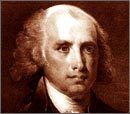
“There are more instances of the abridgement of the freedom of the people by gradual and silent encroachments of those in power than by violent and sudden usurpations.” |
To return the control of government back to the people as intended.
The first step that must be taken is make drastic cuts in Federal regulations, spending and programs.
Greatly minimize taxes, and to limit the size, power, and function of government to the intended constraints established within the original Constitution and Bill of Rights.
Put education back in the hands of parents, not the hands Federal Government.
Stop the assault on Traditional pro-family values from radical groups, liberal activities judges, anti-God extremists, liberal teachers ,the bias liberal media , and the >socialists in congress
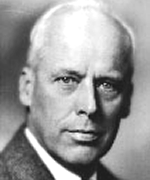
“The American people will never knowingly adopt socialism. But, under the name of “liberalism,” they will adopt every fragment of the socialist program, until one day America will be a socialist nation, without knowing how it happened.” |
We must stop illegal immigration and reduce total immigration.
++++++++
Thank You !!! Members Of The Armed Services !!!
Not Yours To Give
Col. David Crockett
US Representative from Tennessee

One day in the House of Representatives a bill was taken up appropriating money for the benefit of a widow of a distinguished naval officer.Several beautiful speeches had been made in its support. The speakerwas just about to put the question when Crockett arose:
"Mr. Speaker--I have as much respect for the memory of the deceased, and as much sympathy for the suffering of the living, if there be, as any man in this House, but we must not permit our respect for the dead or our sympathy for part of the living to lead us into an act of injustice to the balance of the living. I will not go into an argument to prove that Congress has not the power to appropriate this money as an act of charity. Every member on this floor knows it.
We have the right as individuals, to give away as much of our own money as we please in charity; but as members of Congress we have no right to appropriate a dollar of the public money. Some eloquent appeals have been made to us upon the ground that it is a debt due the deceased. Mr. Speaker, the deceased lived long after the close of the war; he was in office to the day of his death, and I ever heard that the government was in arrears to him.
"Every man in this House knows it is not a debt. We cannot without the grossest corruption, appropriate this money as the payment of a debt. We have not the semblance of authority to appropriate it as charity. Mr. Speaker, I have said we have the right to give as much money of our own as we please. I am the poorest man on this floor. I cannot vote for this bill, but I will give one week's pay to the object, and if every member of Congress will do the same, it will amount to more than the bill asks."
He took his seat. Nobody replied. The bill was put upon its passage, and, instead of passing unanimously, as was generally supposed, and as, no doubt, it would, but for that speech, it received but few votes, and, of course, was lost.
Later, when asked by a friend why he had opposed the appropriation, Crockett gave this explanation:
"Several years ago I was one evening standing on the steps of the Capitol with some members of Congress, when our attention was attracted by a great light over in Georgetown. It was evidently a large fire. We jumped into a hack and drove over as fast as we could. In spite of all that could be done, many houses were burned and many families made houseless, and besides, some of them had lost all but the clothes they had on. The weather was very cold, and when I saw so many children suffering, I felt that something ought to be done for them. The next morning a bill was introduced appropriating $20,000 for their relief. We put aside all other business and rushed it through as soon as it could be done.
"The next summer, when it began to be time to think about election, I concluded I would take a scout around among the boys of my district. I had no opposition there but, as the election was some time off, I did not know what might turn up. When riding one day in a part of my district in which I was more of a stranger than any other, I saw a man in a field plowing and coming toward the road. I gauged my gait so that we should meet as he came up, I spoke to the man. He replied politely, but as I thought, rather coldly.
"I began: 'Well friend, I am one of those unfortunate beings called candidates and---
"Yes I know you; you are Colonel Crockett. I have seen you once before, and voted for you the last time you were elected. I suppose you are out electioneering now, but you had better not waste your time or mine, I shall not vote for you again."
"This was a sockdolger...I begged him tell me what was the matter.
"Well Colonel, it is hardly worthwhile to waste time or words upon it. I do not see how it can be mended, but you gave a vote last winter which shows that either you have not capacity to understand the Constitution, or that you are wanting in the honesty and firmness to be guided by it. In either case you are not the man to represent me. But I beg your pardon for expressing it that way. I did not intend to avail myself of the privilege of the constituent to speak plainly to a candidate for the purpose of insulting you or wounding you.
I intend by it only to say that your understanding of the constitution is very different from mine; and I will say to you what but for my rudeness, I should not have said, that I believe you to be honest.
But an understanding of the constitution different from mine I cannot overlook, because the Constitution, to be worth anything, must be held sacred, and rigidly observed in all its provisions. The man who wields power and misinterprets it is the more dangerous the honest he is.
" 'I admit the truth of all you say, but there must be some mistake. Though I live in the backwoods and seldom go from home, I take the papers from Washington and read very carefully all the proceedings of Congress. My papers say you voted for a bill to appropriate $20,000 to some sufferers by fire in Georgetown. Is that true?
"Well my friend; I may as well own up. You have got me there. But certainly nobody will complain that a great and rich country like ours should give the insignificant sum of $20,000 to relieve its suffering women and children, particularly with a full and overflowing treasury, and I am sure, if you had been there, you would have done just the same as I did.
"It is not the amount, Colonel, that I complain of; it is the principle. In the first place, the government ought to have in the Treasury no more than enough for its legitimate purposes. But that has nothing with the question. The power of collecting and disbursing money at pleasure is the most dangerous power that can be entrusted to man, particularly under our system of collecting revenue by a tariff, which reaches every man in the country, no matter how poor he may be, and the poorer he is the more he pays in proportion to his means.
What is worse, it presses upon him without his knowledge where the weight centers, for there is not a man in the United States who can ever guess how much he pays to the government. So you see, that while you are contributing to relieve one, you are drawing it from thousands who are even worse off than he.
If you had the right to give anything, the amount was simply a matter of discretion with you, and you had as much right to give $20,000,000 as $20,000. If you have the right to give at all; and as the Constitution neither defines charity nor stipulates the amount, you are at liberty to give to any and everything which you may believe, or profess to believe, is a charity and to any amount you may think proper. You will very easily perceive what a wide door this would open for fraud and corruption and favoritism, on the one hand, and for robbing the people on the other. 'No, Colonel, Congress has no right to give charity.
"'Individual members may give as much of their own money as they please, but they have no right to touch a dollar of the public money for that purpose. If twice as many houses had been burned in this country as in Georgetown, neither you nor any other member of Congress would have Thought of appropriating a dollar for our relief. There are about two hundred and forty members of Congress. If they had shown their sympathy for the sufferers by contributing each one week's pay, it would have made over $13,000. There are plenty of wealthy men around Washington who could have given $20,000 without depriving themselves of even a luxury of life.
"The congressmen chose to keep their own money, which, if reports be true, some of them spend not very creditably; and the people about Washington, no doubt, applauded you for relieving them from necessity of giving what was not yours to give. The people have delegated to Congress, by the Constitution, the power to do certain things. To do these, it is authorized to collect and pay moneys, and for nothing else. Everything beyond this is usurpation, and a violation of the Constitution.
"'So you see, Colonel, you have violated the Constitution in what I consider a vital point. It is a precedent fraught with danger to the country, for when Congress once begins to stretch its power beyond the limits of the Constitution, there is no limit to it, and no security for the people. I have no doubt you acted honestly, but that does not make it any better, except as far as you are personally concerned, and you see that I cannot vote for you.
"I tell you I felt streaked. I saw if I should have opposition, and this man should go to talking and in that district I was a gone fawn-skin. I could not answer him, and the fact is, I was so fully convinced that he was right, I did not want to. But I must satisfy him, and I said to him:
"Well, my friend, you hit the nail upon the head when you said I had not sense enough to understand the Constitution. I intended to be guided by it, and thought I had studied it fully. I have heard many speeches in Congress about the powers of Congress, but what you have said here at your plow has got more hard, sound sense in it than all the fine speeches I ever heard. If I had ever taken the view of it that you have, I would have put my head into the fire before I would have given that vote; and if you will forgive me and vote for me again, if I ever vote for another unconstitutional law I wish I may be shot.
"He laughingly replied; 'Yes, Colonel, you have sworn to that once before, but I will trust you again upon one condition. You are convinced that your vote was wrong. Your acknowledgment of it will do more good than beating you for it. If, as you go around the district, you will tell people about this vote, and that you are satisfied it was wrong, I will not only vote for you, but will do what I can to keep down opposition, and perhaps, I may exert some little influence in that way.
"If I don't, said I, 'I wish I may be shot; and to convince you that I am in earnest in what I say I will come back this way in a week or ten days, and if you will get up a gathering of people, I will make a speech to them. Get up a barbecue, and I will pay for it.
"No, Colonel, we are not rich people in this section but we have plenty of provisions to contribute for a barbecue, and some to spare for those who have none. The push of crops will be over in a few days, and we can then afford a day for a barbecue. This Thursday; I will see to getting it up on Saturday week. Come to my house on Friday, and we will go together, and I promise you a very respectable crowd to see and hear you.
"'Well I will be here. But one thing more before I say good-bye. I must know your name."
"'My name is Bunce.
"'Not Horatio Bunce?
"'Yes
"'Well, Mr. Bunce, I never saw you before, though you say you have seen me, but I know you very well. I am glad I have met you, and very proud that I may hope to have you for my friend.
"It was one of the luckiest hits of my life that I met him. He mingled but little with the public, but was widely known for his remarkable intelligence, and for a heart brim-full and running over with kindness and benevolence, which showed themselves not only in words but in acts. He was the oracle of the whole country around him, and his fame had extended far beyond the circle of his immediate acquaintance. Though I had never met him, before, I had heard much of him, and but for this meeting it is very likely I should have had opposition, and had been beaten. One thing is very certain, no man could now stand up in that district under such a vote.
"At the appointed time I was at his house, having told our conversation to every crowd I had met, and to every man I stayed all night with, and I found that it gave the people an interest and confidence in me stronger than I had ever seen manifested before.
"Though I was considerably fatigued when I reached his house, and, under ordinary circumstances, should have gone early to bed, I kept him up until midnight talking about the principles and affairs of government, and got more real, true knowledge of them than I had got all my life before."
"I have known and seen much of him since, for I respect him - no, that is not the word - I reverence and love him more than any living man, and I go to see him two or three times every year; and I will tell you, sir, if every one who professes to be a Christian lived and acted and enjoyed it as he does, the religion of Christ would take the world by storm.
"But to return to my story. The next morning we went to the barbecue and, to my surprise, found about a thousand men there. I met a good many whom I had not known before, and they and my friend introduced me around until I had got pretty well acquainted - at least, they all knew me.
"In due time notice was given that I would speak to them. They gathered up around a stand that had been erected. I opened my speech by saying:
"Fellow-citizens - I present myself before you today feeling like a new man. My eyes have lately been opened to truths which ignorance or prejudice or both, had heretofore hidden from my view. I feel that I can today offer you the ability to render you more valuable service than I have ever been able to render before. I am here today more for the purpose of acknowledging my error than to seek your votes. That I should make this acknowledgment is due to myself as well as to you. Whether you will vote for me is a matter for your consideration only."
"I went on to tell them about the fire and my vote for the appropriation and then told them why I was satisfied it was wrong. I closed by saying:
"And now, fellow-citizens, it remains only for me to tell you that the most of the speech you have listened to with so much interest was simply a repetition of the arguments by which your neighbor, Mr. Bunce, convinced me of my error.
"It is the best speech I ever made in my life, but he is entitled to the credit for it. And now I hope he is satisfied with his convert and that he will get up here and tell you so.
"He came up to the stand and said:
"Fellow-citizens - it affords me great pleasure to comply with the request of Colonel Crockett. I have always considered him a thoroughly honest man, and I am satisfied that he will faithfully perform all that he has promised you today.
"He went down, and there went up from that crowd such a shout for Davy Crockett as his name never called forth before
"I am not much given to tears, but I was taken with a choking then and felt some big drops rolling down my cheeks. And I tell you now that the remembrance of those few words spoken by such a man, and the honest, hearty shout they produced, is worth more to me than all the honors I have received and all the reputation I have ever made, or ever shall make, as a member of Congress.
"Now, sir," concluded Crockett, "you know why I made that speech yesterday. "There is one thing which I will call your attention, "you remember that I proposed to give a week's pay. There are in that House many very wealthy men - men who think nothing of spending a week's pay, or a dozen of them, for a dinner or a wine party when they have something to accomplish by it. Some of those same men made beautiful speeches upon the great debt of gratitude which the country owed the deceased--a debt which could not be paid by money--and the insignificance and worthlessness of money, particularly so insignificant a sum as $20,000 when weighed against the honor of the nation. Yet not one of them responded to my proposition. Money with them is nothing but trash when it is to come out of the people. But it is the one great thing for which most of them are striving, and many of them sacrifice honor, integrity, and justice to obtain it."
THE ONLY FLAG THAT DOESN'T FLY
Between the fields where the flag is planted, there are 9+ miles of flower fields that go all the way to the ocean. The flowers are grown by seed companies. It's a beautiful place, close to Vandenberg AFB.! Check out the dimensions of the flag. The Floral Flag is 740 feet long and 390 feet wide and maintains the proper Flag dimensions, as described in Executive Order #10834. This Flag is 6.65 acres and is the first Floral Flag to be planted with 5 pointed Stars, comprised of White Larkspur. Each Star is 24 feet in diameter; each Stripe is 30 feet wide . This Flag is estimated to cont ain more than 400,000 Larkspur plants, with 4 -5 flower stems each, for a total of more than 2 million flowers.
Aerial photo courtesy of Bill Morson Soldiers' Prayer For our soldiers....
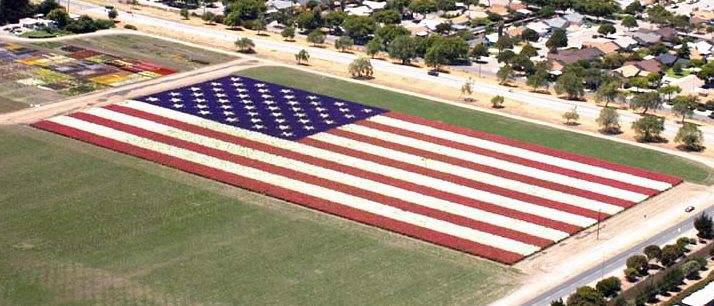
When you see this, please stop for a moment and say a prayer for our servicemen.
THE ONLY FLAG THAT DOESN'T FLY
|
|
|
|
|
|
“The Revolution was effected before the War commenced. The Revolution was in the minds and hearts of the people; a change in their religious sentiments of their duties and obligations. This radical change in the principles, opinions, sentiments, and affections of the people, was the real American Revolution.” |
|
|
|
|
|
|
|
|
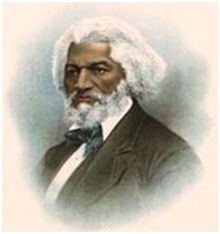
“Power concedes nothing without a demand. It never did, and it never will. Find out just what the people will submit to and you have found out the exact amount of injustice and wrong which will be imposed upon them; and these will continue till they have resisted with either words or blows, or by both. The limits of tyrants are prescribed by the endurance of those whom they suppress.” |
|
|
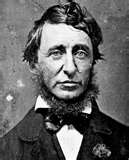 “But, to speak practically and as a citizen, unlike those who call themselves no-government men, I ask for, not at one no government, but at once a better government. Let every man make known what kind of government would command his respect, and that will be one step toward obtaining it.” “But, to speak practically and as a citizen, unlike those who call themselves no-government men, I ask for, not at one no government, but at once a better government. Let every man make known what kind of government would command his respect, and that will be one step toward obtaining it.”— Henry David Thoreau, On the Duty of Civil Disobedience |
|
|
|
